











Where Teams
re-evaluate Snowflake

Workload sprawl
Multiple models, teams, and products introduce coordination complexity.

Utilization efficiency
Idle GPUs quietly erode ROI as usage fluctuates

Cost predictability
Spend needs to be forecastable as AI usage maps to adoption

Operational burden
Scaling, reliability, and governance work become permanent
%20.png?width=1200&height=629&name=Output%20Speed%20vs%20Price%20(8%20Oct%2025)%20.png "Output Speed vs Price (8 Oct 25)")
Evaluate your AI infrastructure
before you commit

How Clarifai Approaches AI Infrastructure
Clarifai is built for teams that view AI as long-term infrastructure, not a point solution for inference.
Instead of treating compute, orchestration, and inference as separate concerns, Clarifai unifies them into a single platform.
Unified AI infrastructure platform
Instead of stitching together GPU hosting, orchestration tools, and inference layers, Clarifai unifies them into a single control plane — built to handle production traffic, agentic workloads, and SaaS economics.
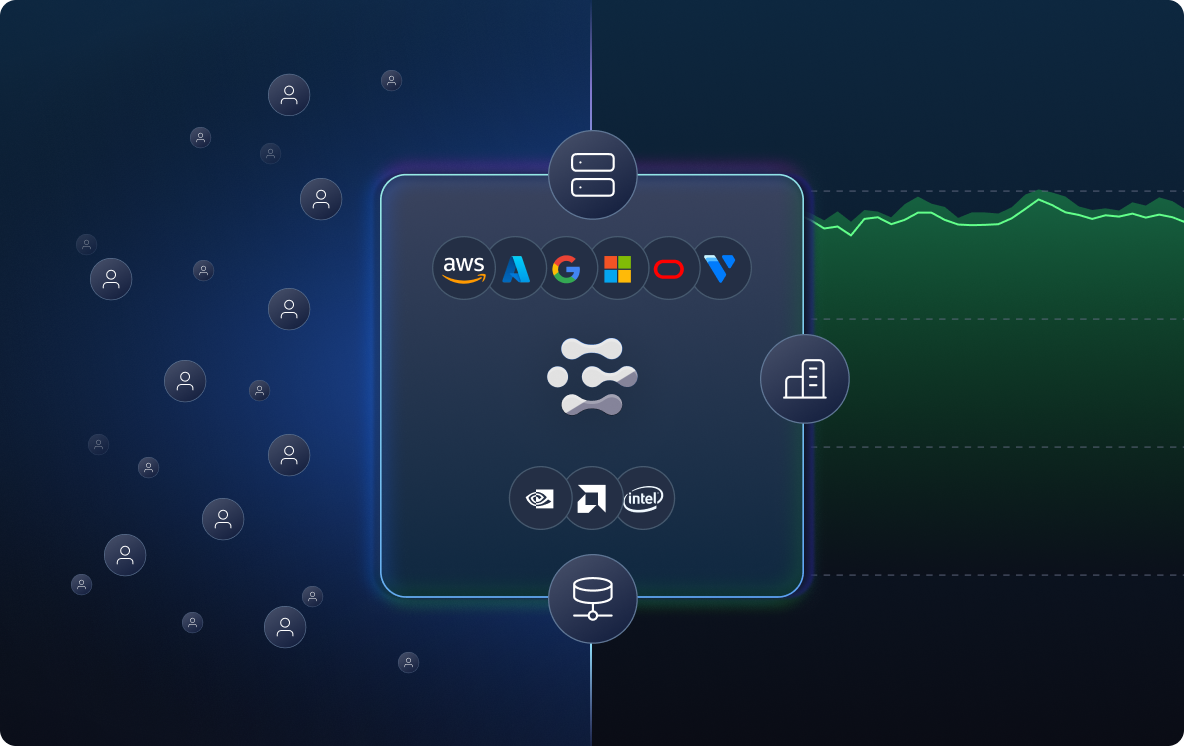
Built for real concurrency and agentic workloads
Clarifai’s orchestration layer handles bursty traffic, long-context reasoning, retries, and streaming inference — the patterns common in AI-native SaaS products, not demos.
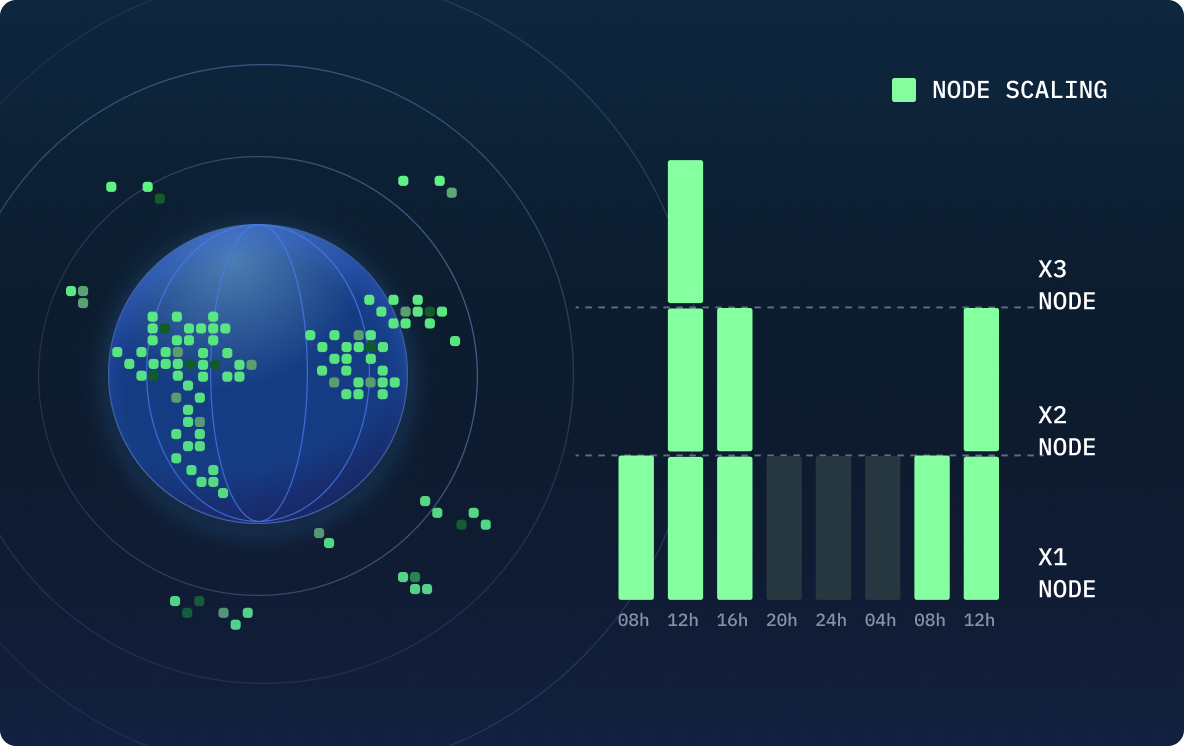
Cost Control
Fractioning, batching, and low-level optimizations maximize throughput per GPU. The result isn’t just faster inference — it’s lower cost per unit of AI work.
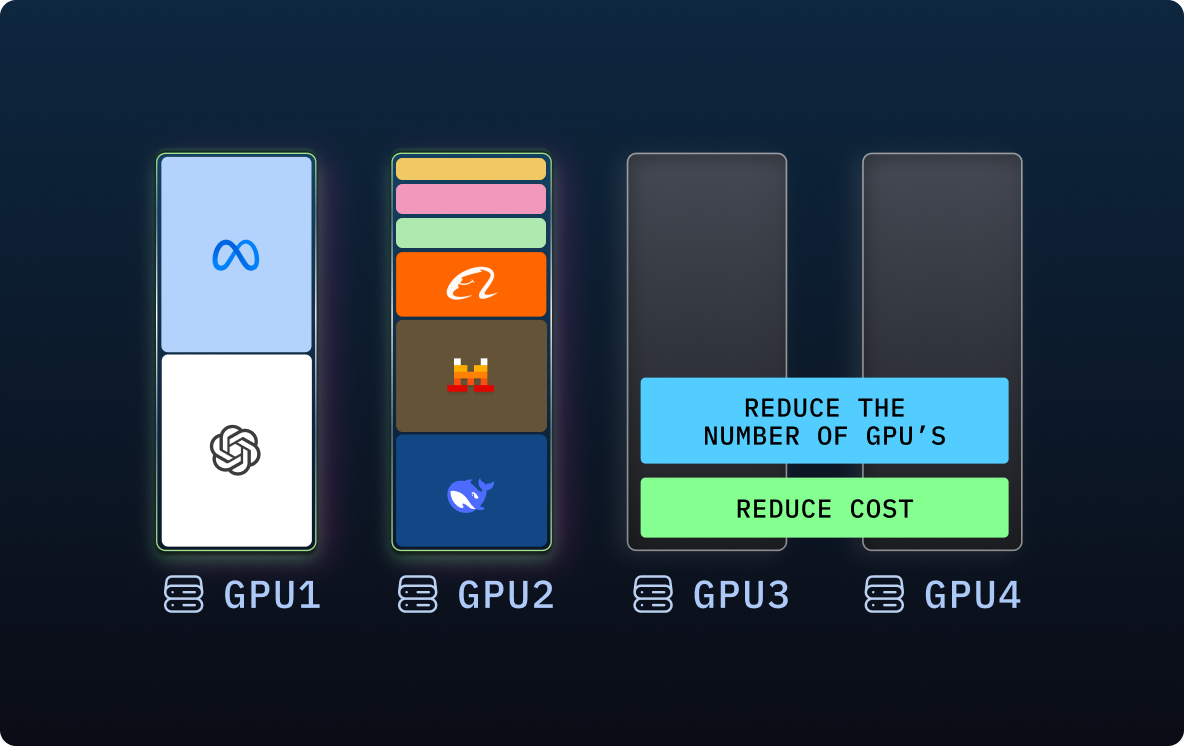
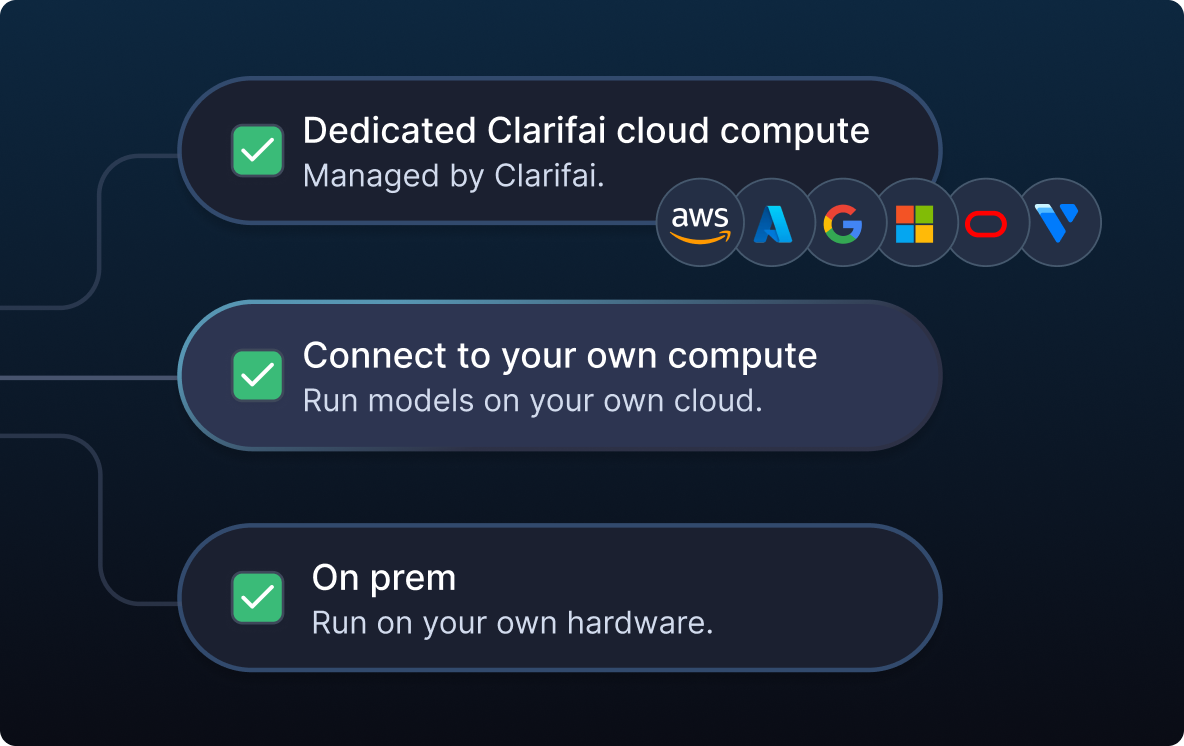
Cross-cloud and private deployment options
Run across AWS, Azure, GCP, on-prem, or private environments with consistent governance. Avoid lock-in while maintaining control as customers and compliance needs evolve.
How Teams Evaluate AI Infrastructure Long-Term
Concurrency-safe performance
Stable latency when real users hit AI at the same time.
Cost efficiency and predictability
AI spend must scale in ways finance teams can model — not just look cheap per unit in isolation.
Compute utilization
Shared infrastructure, autoscaling, and scheduling determine how much GPU capacity actually does useful work.
Operational overhead
Reliability engineering, scaling logic, and on-call load don’t disappear — they compound over time.

Model flexibility
Teams rarely run one model forever. Infrastructure should support open-source, custom, and third-party models without lock-in.
Deployment options
Public cloud, private environments, hybrid, and on-prem become relevant as organizations grow.
Governance and control
Isolation, security, and auditability increasingly matter — especially for larger customers.
Evaluate your AI infrastructure
before you commit